

Postgraduate Fashion Technology Futures
The Fashion Technology Futures postgraduate program is based on the belief that fashion today arisesa at the intersection of body, material, technology, and visual culture. In this program, technology is primarily approached as a cultural, critical, and strategic tool within contemporary fashion practices. Technical skills and tool training are a means to an end here.
Within this postgraduate program, participants explore how technological developments are fundamentally changing the way we design, produce, present, and experience fashion. Digital production processes, immersive media, experimental design practices, and new materials are linked to critical reflection on the social and cultural impact of technology. Technology is not merely used in a possibility-driven way, but is questioned in its normative, formative, and sometimes challenging role within fashion and visual culture.
Fashion does not arise exclusively in discourse, media, or positioning, but in the concrete confrontation between body, material, size, fit, and collection construction. The body functions as the place where choices, norms, and exclusions become visible.
Based on this conviction, the program consciously focuses on research, experimentation, and studio practice. Participants work on their own projects and develop a personal and future-oriented design or research practice within an international and interdisciplinary.
About the programme
The Postgraduate Fashion & Technology is a one-year programme for designers, artists and creative professionals who want to explore how technology reshapes fashion and visual culture. We welcome candidates from all over the world.
This programme is an introduction to a range of technical tools.. Instead, technology is approached as a creative, cultural and strategic medium. Students learn how to use emerging technologies to develop strong concepts, experimental projects and a professional portfolio with visibility in the field.
The programme is practice-based, research-driven and closely connected to industry and cultural partners.
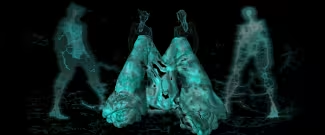
Photo: Iconic Industries Styria, Flora Miranda, Mutani
Teaching team
The programme is taught by an interdisciplinary team of lecturers, researchers and industry professionals working across fashion, media, design and digital culture.
Ann Claes (Masjien,) Flora Miranda, Taskin Goec, Lola Ilegems and others. Teaching staff includes experts in:
- Fashion design and fashion communication
- Digital and immersive media
- Visual culture and critical theory
- Speculative design and research methods
- Creative entrepreneurship and portfolio development
Guest lecturers from industry and cultural institutions will contribute throughout the year.
Coordinator: Flora Miranda (Fashiontech@pxl.be)
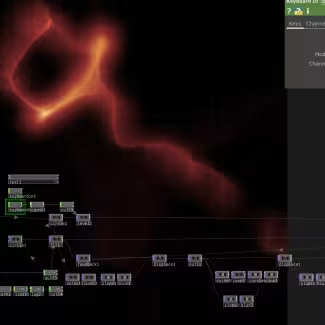
Photo: Touchdesigner
Programme structure
The postgraduate consists of five modules that run throughout the academic year and culminate in a final project and public presentation.
Module 1 — Fashion, Technology & Visual Culture
This module introduces the cultural, historical and theoretical context of fashion and technology. Students explore:
- Fashion as a cultural and social system
- Technology as a creative and critical tool
- Contemporary digital fashion and media practices
- Ethics, sustainability and the future of fashion
The module provides the conceptual foundation for the programme.
Module 2 — Research, Experiment & Concept Development
Students learn how to develop ideas through research and experimentation. Focus:
- Creative research methods
- Speculative and critical design
- Experimentation and prototyping
- Developing a strong concept and research question
This module supports students in defining their personal project direction.
Module 3 — Digital Media & Storytelling
This module explores how fashion operates within contemporary media and digital environments. Topics include:
- Fashion film and digital storytelling
- Social media and digital audiences
- Visual communication and narrative building
- Hybrid and immersive presentation formats
Students develop new ways of communicating fashion ideas.
Module 4 — Professional Practice & Entrepreneurship
Students learn how to position themselves professionally and connect with the field. Focus:
- Portfolio development
- Project visibility and presentation
- Funding and collaboration
- Working with cultural and industry partners
This module prepares students for professional opportunities after graduation.
Module 5 — Final Project & Public Presentation
Throughout the year students work on an individual project that integrates research, experimentation and communication. The programme culminates in:
- A final project
- Portfolio development
- A public presentation or exhibition
Admission procedure
Admission is based on portfolio and motivation.
Step 1 — Application
Candidates submit before Juin 30, 2027:
- CV
- Portfolio
- Motivation statement
Please complete the registration form here
Step 2 — Online admission interview
Shortlisted candidates are invited to an online conversation with the teaching team.
This interview focuses on:
- Motivation and ambitions
- Creative practice and experience
- Ideas and expectations for the programme
The goal is to explore how the programme fits your trajectory and interests.
Photo: Elsa Okazaki, Flora Miranda, Sarah Mayer
Tuition fee
The tuition fee for the Postgraduate Fashion Technology Futures is: €3000
The fee includes:
- All teaching and supervision
- Access to facilities and workshops
- Guest lectures and industry sessions
- Participation in the final presentation/exhibition
Travel, accommodation and personal project and course materials are not included.
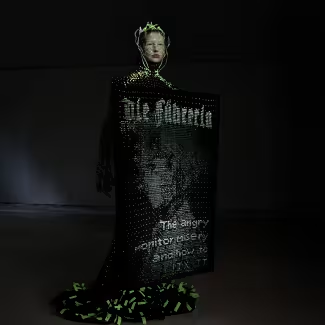
Photo: Flora Miranda
Target audience
This programme is designed for creatives worldwide who want to rethink fashion through technology, media and critical design. We welcome applicants with a background in:
- Fashion design
- Graphic design
- Media and communication
- Fine arts
- Product or industrial design
- Architecture or spatial design
- Photography, film or digital media
- Creative technology or related fields
- Object and Jewellery Design
We also welcome applicants with relevant professional experience who may not hold a formal diploma but can demonstrate a strong portfolio and motivation. The programme is ideal for:
- Recent graduates who want to specialise
- Creative professionals who want to expand their practice
- Designers who want to explore digital and emerging technologies
- Artists interested in fashion and visual culture
Photo: CLO3D
Career outcomes
After completing the Postgraduate Fashion & Technology, graduates will be able to position themselves at the intersection of fashion, media and technology. Possible career paths include:
- Digital fashion designer
- Fashion creative / art director
- Fashion communication and media specialist
- Creative researcher or concept developer
- Fashion film or digital storyteller
- Innovation and trend researcher
- Exhibition or cultural project developer
- Independent designer or creative entrepreneur
Photo: Onassis Foundation, Frederik Heyman
Partners
The programme is developed in close collaboration with cultural and professional partners, including:
- City of Hasselt
- Flanders DC
Additional partners and guest contributors will be announced throughout the year.
These collaborations create opportunities for real-world projects, networking and visibility.